Friday, January 29, 2010

(Do The) Push And Pull, Pt 1 (STAX 0079)


(Do The) Push And Pull, Pt 1

You Can't Make This Stuff Up


So, after the Willie Mitchell Memorial Celebration, people were hanging out in the lobby of the Church, just kind of catching up on old times. I was talking with Otis Clay, Darryl Carter and Howard Grimes, all of whom I have gotten to know better since the O.V. Memorial back in 2008. Along came a lady in red, who proceeded to rub Howard's cheeks. "He's always smiling like that. I always rub 'em whenever I see him, for good luck. He was the drummer on my first record..."


Carla Thomas... I couldn't believe it. Here I was actually getting to meet this woman who played such an important role in the history of Stax. A woman who, for whatever reason, has been thought of as some sort of recluse for the past couple of decades. She was great. Funny and outgoing, with a twinkle in her eye that puts you in mind of her father...


I watched as Al Bell came up to her. I would venture to say that they hadn't been in the same room together since Stax went out of business 35 years ago.


A lot of water has gone under that bridge. The friction between the old and the new at Stax in those days was kind of embodied in Bell's relationship with the Thomas family. A lot of words have been left unspoken. As I said last week, Al is back in town as the head of the Memphis Music Foundation. He was genuinely glad to see Carla, and seemed to welcome the opportunity to let his voice be heard. I spoke with him for some time about the bankruptcy, and he told me in minute detail how it all went down. Not a pretty story, it included, he said, a hit squad that had orders to take him out unless he did what the big money boys wanted him to do. Incredible stuff.

As it turned out, people were going back to the Marriott downtown, and Carla needed a ride. I, of course, offered my services. As we were on our way out, we met up with her brother Marvell (one of Chips Moman's original Triumphs, and the keyboard man on so many great Stax records), who wasn't sure which lot he had left his car in (the place is HUGE). I offered to give him a ride to go look for it. I started talking about how I had Sattelite Radio in this car I rented, and that I had heard Carla on there twice in one hour on the way down. Once we were all in the car, I tuned the radio to Soul Town, and some song was just finishing up.

As the first notes of the next tune came out of the speakers, both of them yelled at once "It's Daddy!" You really can't make this stuff up, folks. Here I am with Carla and Marvell Thomas in my car, which in itself is as unlikely a scenario as one could possibly imagine, and out of all the songs on all the stations in all the world, here's Rufus Thomas (doing a song that was produced by Al Bell, no less) beaming from some Sattelite back down into Memphis, doin' the Push and Pull. Our hair was literally standing on end. It was spooky, man. I don't know if you believe in this kind of stuff, but I sure do. There are no coincidences, my friends. This had to be some kind of sign...

Back at the Marriott, Marvell met up with Sir Mack Rice.

We were soon joined by J. Blackfoot and Eddie Floyd,

as Carla sat there on the couch with David Porter and Al Bell.

Along with a few soul devotees from the UK who had made the trip for Willie's funeral, we had us a time, talking about those storied salad days at Stax. Days when Carla was the Queen to Otis Redding's King, days of Gee Whiz and B-A-B-Y. Like some kind of impromptu Stax reunion, I think some bridges were built, and ideas hatched for some incredible possibilities down the line.

After a while, Carla asked me to take her to another post-Willie Tribute party that was being held at The View, the funky Soul and Blues club out by the airport. We, of course, got lost for a while navigating the I-40/240 nightmare, and it gave me the opportunity to speak with her at length. This is one incredible woman, folks. She has been there and done that. The heir apparent to her father's incredible legacy as the ambassador of Memphis Music, she has chosen to live in obscurity. She has no telephone. "Are you ready to reclaim your rightful place as the Queen of Memphis Soul?" I asked her.

She wanted no part of it...

When we got out to the club, it was obvious how much she was loved by everyone in the place. As they were winding down a set that had included Queen Ann Hines and Toni Green, they pulled Carla up on stage and the joint went nuts.

She didn't sing. She didn't have to.

Sunday, October 29, 2006

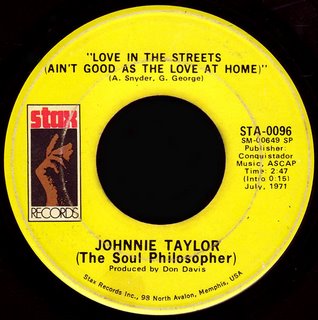
Johnnie Taylor (The Soul Philosopher) - Love In The Streets (Ain't Good As The Love At Home) (STAX 0096)


Love In The Streets (Ain't Good As The Love At Home)

Triple Play


Johnnie Taylor spent his early childhood in West Memphis, Arkansas, just across the river from the big town. He moved with his Grandmother to Kansas City in the late forties and was singing with local Gospel quartet The Melody Kings by the time he reached his teens. Relocating further north to Chicago in the early fifties, he began singing R&B with The Five Echoes, recording for the Sabre and Vee-Jay labels in 1954.
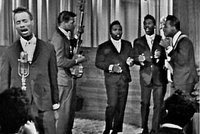
When Sam Cooke was recruited by The Soul Stirrers in 1951, The Highway QCs were left without a lead singer. Although they kind of fell apart after that, they had regrouped by early 1955 and persuaded Johnnie to leave R&B and come sing Gospel with them. Sam heard about the cocky new lead that 'sounded just like him', and decided to check it out. He was impressed with Johnnie's talent (and his whole 'dig me' attitude), and began showing up at their rehearsals. He encouraged them to work on Somewhere To Lay My Head, and they recorded it for Vee-Jay in May of 1955 with Johnnie Taylor on lead vocal. Despite the fact that The Sensational Nightingales had already released a version of the song earlier in the year, it became a bona-fide Gospel hit that summer for the QCs.
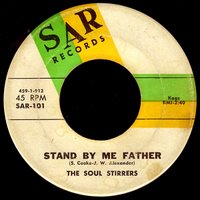
Cooke, of course, would leave The Soul Stirrers the following year, and launch his own pop career on the small west coast Keen label before being picked up by RCA. Consequently, The Soul Stirrers were once again in the market for a lead singer, and convinced Johnnie to leave the Highway QCs behind and join up with them in 1957. When they lost their contract with Specialty Records in 1958, the Stirrers signed with Sam's new SAR label, with Stand By Me Father being the company's first release in 1959 (for more on this whole period, please visit holy ghost).
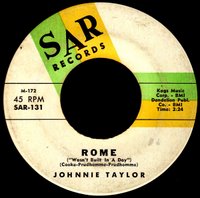
Taylor would leave The Soul Stirrers in 1960, and return to singing R&B as a solo artist for SAR and its subsidiary Derby beginning in 1961 (please check out the Rome (Wasn't Built In A Day) post over on The A Side for more information about his time with SAR). After Cooke was killed in late 1964, his record labels ceased to exist, and Johnnie was left without a recording contract in 1965.

"I was living in Kansas City," he said, "...I got to St. Louis and I decided I'd toss up a dime. I said, 'Should I go towards Detroit for Motown or should I take the southern route to Stax?' Stax won out."
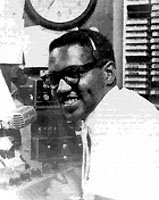
Al Bell had made a name for himself in Memphis as the new suave and sophisticated voice of R&B as a dee-jay on WLOK. He went on to greener pastures in Washington DC, and introduced the city to authentic Southern Soul on WUST in the early sixties. Jim Stewart brought him back to Memphis in 1965 as their first full-time promotion man. Bell immediately set about his plans for improving the label, and bringing it 'up to date'. Under his direction, the company began to produce quality LPs as well as singles and, due to his connections in radio, had more top ten hits in his first year at the company than they ever had before. He was eager to expand their roster of artists, and so was more than happy to sign Johnnie Taylor to a contract in January of 1966.
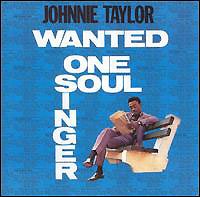
His first Stax release, I Had a Dream, was an excellent blues vehicle that was written and produced for him by Isaac Hayes and David Porter. It cracked the top 20 R&B, and set the tone for his Stax releases for the next couple of years. This period, with his records being produced by either Hayes and Porter or Al Jackson Jr. and Booker T, generated some of Johnnie's best sides ever. His first Stax LP, Wanted: One Soul Singer is simply a 'must-have'.

In December of 1967, Johnnie was a pallbearer at Otis Redding's funeral, and sang I'll Be Standing By accompanied by Booker T on the organ. Little did he know he was about to take Otis' place as Stax's best known artist.

Don Davis was a Detroit guitar player that had worked on some early Motown material before turning to production. He was involved with several Detroit labels (like Thelma and Revillot) before starting up his own Groovesville imprint. A song he produced for the label, Baby Please Come Back Home, was an R&B top ten hit for J.J. Barnes in May of 1967. Al Bell had this idea of combining the Memphis and Detroit sounds, and co-produced a record with Davis on Carla Thomas called Pick Up The Pieces. It would break into the top 20 in early 1968, and basically reinforce the idea that he was on the right track. Bell decided to bring Davis to Stax, and hired him as a producer in September of 1968, a decision that was none too popular with the rest of the gang down on McLemore Avenue.
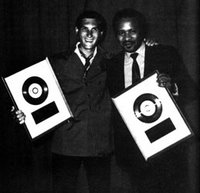
When Homer Banks brought a song he had written (with his 'We Three' partners Raymond Jackson and Bettye Crutcher) to the 'Big 6' production pool (Booker T & the MGs, Isaac Hayes, and David Porter) at Stax it was summarily dismissed. He then brought it to Don Davis, essentially going behind the other's backs. Davis loved it, and prevailed upon Al Bell to let him cut it on Johnnie Taylor. The whole rest of the team hated it (including Taylor, who called it "that boogity-boogity song"), but Bell basically forced them to give it a shot. When Who's Making Love was released in October of 1968, it broke all of Stax's previous sales records and spent an unprecedented 3 weeks at #1 R&B, while climbing to #5 on the pop charts as well. The record actually features both Davis and Steve Cropper (shown here with the Gold Records they earned for the single) on guitar, and it really does crank. It was the first time that a Stax singer overdubbed his vocals to a pre-recorded backing track (a Davis innovation) and, in so many ways, it just changed everything.

On the basis of the success of Who's Making Love, Bell promoted Davis to 'Vice President in Charge of Production'. The Big 6 went ballistic, with Isaac Hayes actually closing down the studio, and clearing everyone out at gunpoint! Al Bell and Jim Stewart scrambled, and decided to make them ALL vice presidents, a title which now essentially meant nothing. Noses were out of joint, with Booker T (who many thought should have been given the position) refusing to ever play a note for Davis, and leaving the company in late 1969 (Steve Cropper would follow in 1971). Carla Thomas, I'm sure, summed up all of their feelings when she said "He should have stayed in Detroit!"
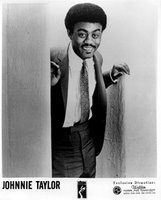
Johnnie Taylor, meanwhile, was thrilled to have Davis as his producer, and was just knocking 'em dead. He followed Who's Making Love with an unparalleled string (for Stax artists anyway) of eight consecutive top ten hits, including gems like Take Care Of Your Homework and Jody's Got Your Girl And Gone. He was, quite simply, 'on top'. According to Rob Bowman's excellent Soulsville USA, Don Davis had decided to steer clear of the Stax studio entirely at this point, and was recording the basic tracks for Johnnie's records at Muscle Shoals, with the addition of the great Eddie Hinton on guitar.
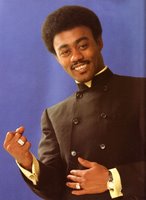
Today's really cool B side (the flip of 1971 top ten hit Hijackin' Love) also features The Dramatics (who had just waxed their #3 smash Whatcha See Is Whatcha Get for Volt) on background vocals. It gives the record this whole Gospel dimension, I think, and you can hear Johnny returning to his Sam Cooke roots... I love that little 'yodel' thing, man. He's really testifying there at the end, ain't he?
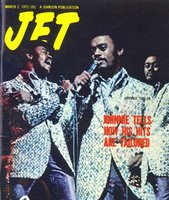

Johnnie Taylor continued to chart regularly for Stax, with huge hits like I Believe In You (You Believe In Me), Cheaper To Keep Her, and We're Getting Careless With Our Love dominating the airwaves right up until the company collapsed under its own weight in 1975. Wasting no time, Johnnie signed with CBS in August of that year, and brought Don Davis with him.
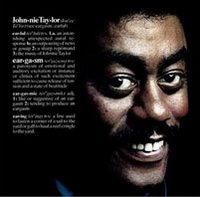
When Columbia Records released Eargasm in early 1976, it was obvious that Johnnie Taylor was, once again, in the right place at the right time. The first single from the album, Disco Lady (written by Davis and Harvey Scales), was an absolute monster. It spent a month at #1 on the pop charts (six weeks R&B), on its way to becoming the FIRST "platinum" record EVER, in any genre. Talk about your big hits! The next single pulled from the album (released the same day as Ted Taylor's version on Alarm), was the phenomenal Somebody's Gettin' It, which went to #5. Love Is Better In The A.M. did even better the following year, and Johnnie was on a roll.
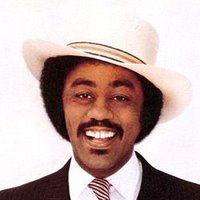
By the end of the decade, however, the whole 'death to disco' backlash took its toll on Johnnie (now understandably viewed as a disco mainstay), and CBS declined to renew his contract in 1981. A short-lived stint with the Beverly Glen label would produce an album, Just Ain't Good Enough, in 1982, and a few singles pulled from the album were released, with What About My Love breaking back into the top 40 R&B.
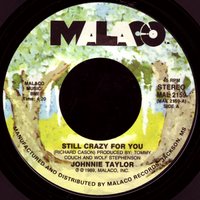
Johnnie had lived in Dallas for years, and when fellow Texas soul man Z.Z. Hill died suddenly in 1984, he was called upon to sing at his funeral. When Malaco Records' Tommy Couch heard him, he asked Dave Clark to convince him to sign with them. Just as with Otis Redding 17 years earlier, Johnnie was about to replace Z.Z. as his new label's biggest selling artist. He had found a home, and would go on to release one solid album after another. Although he hated being pigeonholed as a 'blues' artist, it kinda came with the territory at Malaco, and he dealt with it.
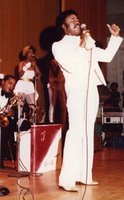
I saw him perform in New York as part of the late lamented Benson & Hedges Blues Festival sometime in the late eighties, and he was fantastic. The 'blues purists' in the audience weren't quite sure what to make of his 'disco' outfit, and his big band, but when he sang songs like Little Bluebird and I Got To Love Somebody's Baby he just brought down the house, man.

His 1996 album Good Love topped Billboard's Blues chart that year, and a hit single from the album, Last Two Dollars, helped to make it Malaco's biggest selling album ever.
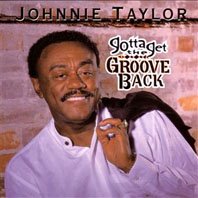
In 1999, Big Head Hundreds (kind of a follow-up to Last Two Dollars) was released as the single from his latest album Got to Get The Groove Back, and became a solid regional hit as well. Taylor had kept up with the times, and the fat production on here, as well as lines like "...this chick talkin' about how she wants a mink coat and diamond rings, a black Navigator and thangs" showed just how bad he managed to remain in a hip-hop world. Whenever I listen to his later Malaco material, I can't help but think that this might have been what Sam Cooke would have sounded like if he was around today...
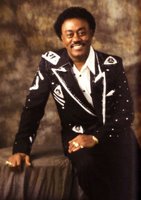
On May 31, 2000 Johnny Taylor was felled by a massive heart attack at his home outside of Dallas. His funeral at the Good Street Baptist Church was attended by over 7000 people, among them soul legends like Aretha Franklin, Al Green and Bobby Womack. People filed silently past his casket for hours. Perhaps Tommy Couch put it best when he hailed him as "the last of the great soul men".

...gone to Soul Heaven.

Sunday, July 01, 2007

The Soul Children - The Sweeter He Is Part II (Stax 0050)


The Sweeter He Is Part II

So... how was it?

In a word, amazing. Despite the corporate (and completely superfluous) teleprompted banter by Randy Jackson and Chuck D, it was a night of pure magic. A night that offered a glimpse of the supreme talent that made the whole Stax phenomenon so special. Backed by a 'house band' that included Stax regulars like Bobby Manuel, Skip Pitts, Wayne Jackson, and (yes) Marvell Thomas, performer after performer just rocked the house. How about Eddie Floyd singing Knock On Wood? Or Mabel John stretching out on Your Good Thing (Is About To End)? Or William Bell holding the crowd in the palm of his hand with his sweet rendition of I Forgot To Be Your Lover?

When Booker T. & The M.G.'s took the stage, the crowd went wild, as smokin' versions of Green Onions and Time Is Tight left 'em hollerin' for more. To see Isaac Hayes (still recovering from the stroke that laid him low last year) conducting the band on Theme From Shaft, or Mavis Staples leading the whole bunch of 'em (and the audience) in singing I'll Take You There to close out the show were indeed special moments. What a night this was...

One of the absolute high points, in my opinion, was a rare appearance by the original Soul Children.

As we mentioned in our last post, the 'Big Six' production team at Stax played an incredibly important role in shaping the label's trademark sound. Isaac Hayes and David Porter had essentially created Sam and Dave, writing songs that fit their image, and providing hands-on production that brought out the best in their 'alter-egoes'. When Stax and Atlantic decided to go their separate ways in early 1968, Sam and Dave became one of the major casualties, as they had been signed to the larger company all along, and had merely been 'on loan' to Stax. This proved to be a rather significant loss, not only because they were the label's biggest sellers at that point, but also because it left Hayes and Porter without enough to do.

Unsure of how to proceed, they were reluctant to simply try and find another pair of personable young guys and put them out there as what would be surely be percieved as some kind of 'cookie-cutter' version of the real thing. In a true stroke of brilliance, they hit upon the idea of a quartet that would pair two men and two women, and provide an even greater vehicle for Hayes and Porter's prodigious talents. The Soul Children were born.

The male contingent was made up of local character J. Blackfoot (aka John Colbert), who had originally come to David Porter's attention singing along with the jukebox in a local bar, and Norman West, who had done a stint with William Bell's former group The Del-Rios before setting out on his own and waxing a few singles for Hi and Smash. Anita Louis, who (like Carla Thomas) had been one of WDIA's Teentown Singers, and Shelbra Bennett, a local girl who 'walked in off the street' and was simply in the right place at the right time, would comprise their 'better half'.

The record buying public was apparently down with the concept, as their first release Give 'Em Love would crack the R&B top 40 in November of 1968. I'll Understand did even better early the following year, while Tighten Up My Thang would keep them in the top 50 that spring. Recorded in July of 1969, the A side of today's cool selection (Part I) was their breakthrough record, soaring to #7 R&B that fall, and reaching #52 on the Billboard Hot 100. With Hayes and Porter's focus now squarely in their corner, The Soul Children had it goin' on!

As they lit into this song the other night in Memphis, the crowd roared their approval, with nearly everyone over a certain age straining to sing along with those high pitched 'doo-doo-doo-DOO-doo-doos' whenever they came around. The Children ate it up, providing some of their trademark 'soul theater', as 'Foot' tossed away his jacket, and had to be helped from the stage as he was just overcome by it all. Fantastic stuff, boys and girls.

With the unprecedented success of Isaac Hayes' album Hot Buttered Soul transforming him into, well, Isaac Hayes, his involvement with The Soul Children was put on hold. They would continue to chart, however, with great records like Hearsay (which was written by Blackfoot and West and actually produced by Jim Stewart and Al Jackson, Jr.) busting into the R&B top five in 1972 and the monster #3 hit I'll Be The Other Woman in early 1974. When Stax went under, they were signed by Epic, releasing a few minor singles, before hitting the R&B top twenty one more time in 1978 with Can't Give Up A Good Thing on the revitalized Fantasy Records version of the Stax label.

Now, here's why I love Memphis.

Last Thursday, after buddy Preston Lauterbach was kind enough (for the price of lunch at his favorite 'meat & three' joint) to show me around the Thomas Street neighborhood in North Memphis where real music can still be heard most weekends, I decided to stop by Royal Studio to visit Willie Mitchell like I did last year.

As various great-grandchildren swirled around us, Willie played me his most recent productions on the Spanish and French acts that have been booking time at the studio recently. I'm not sure who they were (neither was Willie) but, let me tell ya, they all had that trademark 'Hi Sound', and just knocked me out - even though neither one of us could understand what they were saying. As we sat there and talked, people from the neighborhood began to trickle in.

"This is Foot," Willie told me. When that drew a blank stare, he said "You know, J. Blackfoot from The Soul Children." I couldn't believe it. Still an absolute character, Foot traded barbs with 'Pop' as they talked about the upcoming Stax show tomorrow night. We were soon joined by Julius Bradley, the soft-spoken Gospel artist I told you about last year, and local blues sensation Preston Shannon. Truly honored to be there, I got me an earful and a priceless window into the music scene as it exists in Memphis today. We had us a time!

One thing I learned was that Memphis music is alive and well, and not just hidden away in some museum. All three of the guys I was hanging with have current releases that are making some noise locally. J. Blackfoot (whose solo career we'll feature in an upcoming post) has a new CD called It Ain't Over Till It's Over that's all over the radio down there.

Julius Bradley, meanwhile, has completed the album he was working on with Poppa Willie at Royal last year, He Is Coming Back. According to the liner notes, it was 'Written, Composed, Arranged, Performed and Produced' by Julius and 'Mixed, Engineered, and Co-produced under the tutelage and by the Learned Hand of "The Master", Mr. Willie Mitchell'. It's great.

Preston Shannon holds down a regular gig at B.B. King's down on Beale Street, where he just smokes it up with a band that features local keyboard sensation Norris Johnson. I stopped by to see them after the Stax show, and Eddie Floyd (who was celebrating his 72nd birthday that weekend) was in the house. Be With Me Tonight is his latest CD, and it just cooks. If you're down that way, be sure to check 'em out, they're the real deal...

After Preston's set, I kind of snuck in to the Stax 'after-party' that was thrown by the Concord Group over at the Gibson Factory lounge. Rubbing elbows with folks like William Bell and Rob Bowman was cool enough, but when Steve Cropper and Duck Dunn walked in and hung out with us at the bar, I was in soul heaven, baby. It just doesn't get much better than that.

Long live The Sound Of Memphis!

Tuesday, June 14, 2016

CHIPS MOMAN 1937-2016 - COMING HOME


ROY ORBISON

Coming Home
Produced by Chips Moman in Memphis 1985

After I started writing The Chips Moman Story in early 2008, a controversial article appeared in The Commercial Appeal entitled Chips Moman: The Missing Man of Memphis Music. The comments on the article reflected the "complicated love-hate relationship" that Chips had with the city. I couldn't help but add my two cents, and spoke up about what a positive force Moman had been in the development of American Music, and blah blah. I was completely blown away when Chips longtime friend Marty Lacker contacted me and said Chips wanted to talk to me. Not a little nervous when I picked up the phone, I really couldn't believe that this legendary giant of a man had actually called me!

I literally felt like I was speaking with Elvis, or something, and I stammered my way through a few sentences before Chips went out of his way to put me at ease with his affable and genuine 'just one of the boys' manner. He appreciated what I had said in those comments, he told me, and that Marty had showed him the article I had written, and he liked it. This kind of stuff just doesn't happen too often, folks, believe me, and I can't tell you how awesome I thought it was that this man had taken the time to call and tell me that. We talked a little bit about his early days at Stax and the great R&B and Soul records he had cut at American - "That was the good stuff!," he said, and that was about it.

As I continued to write about the music over the next couple of years, I discovered more and more evidence of the underlying subtle genius of Moman's guitar playing and production in all kinds of places where I had least expected it. When the groundbreaking Memphis Boys: The Story of American Studios was released in 2010, I devoured it, and was lucky enough to connect with the author, Roben Jones, who came at the music from a different angle, and helped me to broaden my understanding of the man and his music.

In 2011, The Memphis Boys were slated to play the inaugural show at the newly renovated Franklin Theater in Franklin, Tennessee. I bought tickets the first day they became available, rented a car and drove down. As I parked the car, much to my amazement, I saw Chips sitting alone out back of the theater, smoking. "Don't you have anything better to do, Moman, than to hang around the back of a Movie Theater, sneaking a cigarette?" He looked at me amazed... I really couldn't believe I had just said that, to tell you the truth. "Do I know you?" he said. After I told him who I was, he remembered immediately, and told me he was glad to finally meet me in person. Once again, he went out of his way to put me at ease and seemed to enjoy my pestering him about his early days at Stax with William Bell, Carla Thomas, Prince Conley and The Triumphs. The show was incredible, and I got to hang out with Moman both during intermission and after the show back in the smoking section out in the parking lot. Amazing.

Elvis Week in 2012 was like total Chips immersion as John Broven and I travelled to Memphis for the American Group's Beale Street Note dedication. A few well-placed phone calls helped me accomplish one of my long time goals, to re-unite Moman with Darryl Carter and The Masqueraders, all of whom he hadn't seen since he closed American in 1972. He was so into it.

After another rousing Memphis Boys show at Graceland, we moved on to Nashville where our friend at the Country Music Hall of Fame, Michael Gray, was kind enough to let us hang out backstage with Chips, Bobby Emmons and the rest of 'The Boys' after his excellent interview of Moman for the Museum.

In 2014, it was announced that Shelby County intended to place a Historical Marker at the former site of American Studios at the corner of Chelsea and Thomas in Memphis. Broven and I again made the trip, and were a bit taken aback to see our man Chips arrive in a wheelchair. He had suffered a stroke, and had difficulty speaking, but he was still sharp as a tack. When I brought Howard Grimes (who had been his drummer at Stax over 50 years before) over to see him, he knew him immediately, and it did my heart good to see them back together again.

At the Memphis Boys Salute at Graceland later that night, Chips cheered on his band from the front row, but I knew that things would somehow never be the same. We had taken a lot of photos at the Marker Dedication, and I printed a bunch of them up and sent them out to Chips, Reggie and the rest of The Boys. About a week later, my cell phone rang, and I was amazed to see Moman on the Caller ID. It was Chips' wife Jane, who told me that he insisted she call me to thank me for the pictures. After a couple of minutes, she put him on the line.

He just wanted to tell me, he said through his stroke-slurred speech, how much he appreciated all I had done... I felt the lump in my throat. "No," I told him, "I should be thanking you for all YOU have done for American Music, and I can promise you one thing - as long as I'm around there will be someone out here who will make sure that people never forget just how great and important your work continues to be..."

I hung up the phone and I wept.